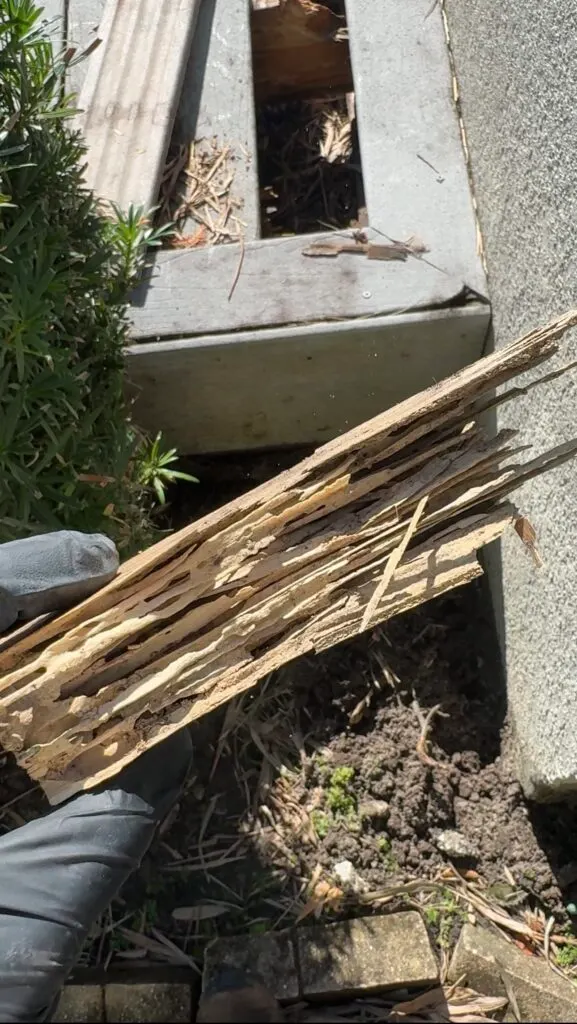
Signs of termites in a Florida home
Termites work quietly inside wood and behind walls. Homeowners insurance rarely covers termite damage, so the earlier you notice these signs, the better.
- Mud tubes: pencil-width tunnels of soil on the foundation, slab edge or garage wall. Subterranean termites build them to travel between the soil and your home.
- Discarded wings: small piles of wings on windowsills or near lights. Swarms often show up in spring, frequently after a rain.
- Tiny pellets: drywood termites push out small, hard droppings that pile up below wood they are feeding in, like a bit of sand or coffee grounds that keeps coming back.
- Small holes with dirt coming out: pinholes in drywall with soil around them can point to subterranean activity inside the wall.
- Hollow or soft wood: baseboards, door frames or trim that sound hollow when tapped, or crumble under a screwdriver.
- Bubbling paint and buckling floors: moisture and tunneling under the surface can make paint blister and floors lift.
- Doors and windows that suddenly stick: damaged frames can warp and change how things close.
Our process, step by step
- Free termite inspectionWe check foundations, attics, exterior walls, entry points, moisture, mud tubes and damaged wood, inside and out.
- Custom planYou get a treatment recommendation built around your home and the activity we actually found, not a one-size package.
- TreatmentFor subterranean termites, a trenched liquid termiticide barrier around the full perimeter and foundation. For drywood termites, a boric-acid-based treatment applied through the attic beams. For activity isolated to one area, a spot treatment.
- Annual monitoringWe come back every year to inspect again, because a lot can change in a year without you noticing.
Treatment options, explained
- Subterranean termite treatment: a liquid barrier trenched around the full perimeter and foundation, with an annual renewal, available for up to 7 years, that guarantees retreatment while it is active.
- Drywood termite and attic treatment: a boric-acid-based treatment applied through the attic beams, with the same warranty protection.
- Spot treatment: a faster, lower-cost option for activity isolated to one area. Because it does not treat the whole structure, it carries no warranty.
New home? Your termite protection may have expired
Florida requires termite protection on every new construction home, so most builders treat the ground before the slab is poured. What most homeowners don't know is that this protection and its warranty expire after a set period, and the home is usually never treated again. Kilpex can re-treat the home to restore that protection and put a warranty back in place. During your inspection, we also check for previous termite treatment tags, which are normally placed on the electrical panel or the water heater.
What makes Kilpex different
Termite work is where trust matters most, because you cannot see what is happening inside your walls. Kilpex is a family business that has been inspecting greater Orlando homes since 2007, and Edgar or Giann does the inspection personally. We show you what we found, explain what it means, and recommend only what the home needs.
Termite protection also ties into our pest plans. Premium Family Pest Protection includes an annual termite inspection with a written report and a $200 credit toward full termite treatment. Total Home Shield includes the same termite benefits plus an attic and roof visual check.
Areas we serve for termite protection
Many homes in our area were built or bought without termite protection in place. We serve greater Orlando only, from our family office at 3662 Avalon Park E Blvd, Suite 2025.
- Termite protection in Lake Nona
- Termite protection in Avalon Park
- Termite protection in Oviedo
- Termite protection in Celebration
Close to one of these communities but not sure we reach your street? See all service areas or call (407) 375-2167 and we will confirm.
Termite questions we hear most
What is the difference between subterranean and drywood termites?
Subterranean termites live in the soil and travel into the home through mud tubes. Drywood termites live inside the wood itself, often in attics, and leave small pellets behind. Each needs a different treatment, which is why we inspect first.
Does homeowners insurance cover termite damage?
Rarely. That is the main reason we recommend protection and a yearly inspection instead of waiting to find damage.
How long does the subterranean termite warranty last?
The treatment comes with an annual renewal, available for up to 7 years, that guarantees retreatment while it is active.
Is a spot treatment enough?
It can be when activity is isolated to one area. It is faster and lower in cost, but because it does not treat the whole structure, it carries no warranty.
Does a pest plan include termite treatment?
Premium Family Pest Protection includes an annual termite inspection with a written report and a $200 credit toward full termite treatment. Full treatment itself is quoted after the inspection.